Introduction: The value shift in SaaS Pricing Strategies
The way we value and pay for software is undergoing significant transformation. We have moved from the Ownership Era, where value was a physical asset bought once and owned forever ("I buy it, I own it"), to the Access Era, where value was tied to continuous availability via the cloud and the "seat" ("I pay to access it").
We are now entering the Value Era, where the paradigm has shifted to: "I pay for a job to be done." In this new era, customers no longer want to pay for "potential" value or headcount; they want to pay for realized outcomes. Whether it is an AI agent resolving a support ticket or an API processing a transaction, the unit of value has moved from the user to the usage.
As a result, software pricing models are evolving from perpetual licenses and seat-based subscriptions toward API-driven, usage-based, and hybrid models. Operationalizing this shift is not just a billing challenge, it is a strategic imperative. This playbook is designed to help you navigate this transition and identify the key levers (whether it is your teams, processes, or tools) to pull to turn your Pricing Model into a competitive advantage.
Navigating the diversity of SaaS Pricing Models: How they work and when they work
The subscription pricing model
The subscription model has been the traditional bedrock of B2B SaaS for years. It involves charging a fixed, recurring fee (typically monthly or annually) in exchange for continuous access to the software. Access is usually segmented into Plans (e.g., Standard, Pro, Enterprise), where higher-tier plans unlock more advanced features, data limits, or support.
Why SaaS companies are using a subscription pricing model
- Predictability: It provides the most stable revenue forecasting for the vendor and cost predictability for users. This model is the primary driver of Annual Recurring Revenue (ARR), the North Star metric that investors prioritize above all else when evaluating a company's health and valuation.
- Simplicity: Subscriptions have been the dominant, standardized pricing model for SaaS. It is the "default choice" that the market expects, offering a familiar framework for vendors, procurement teams, and buyers.
The example of Ahrefs
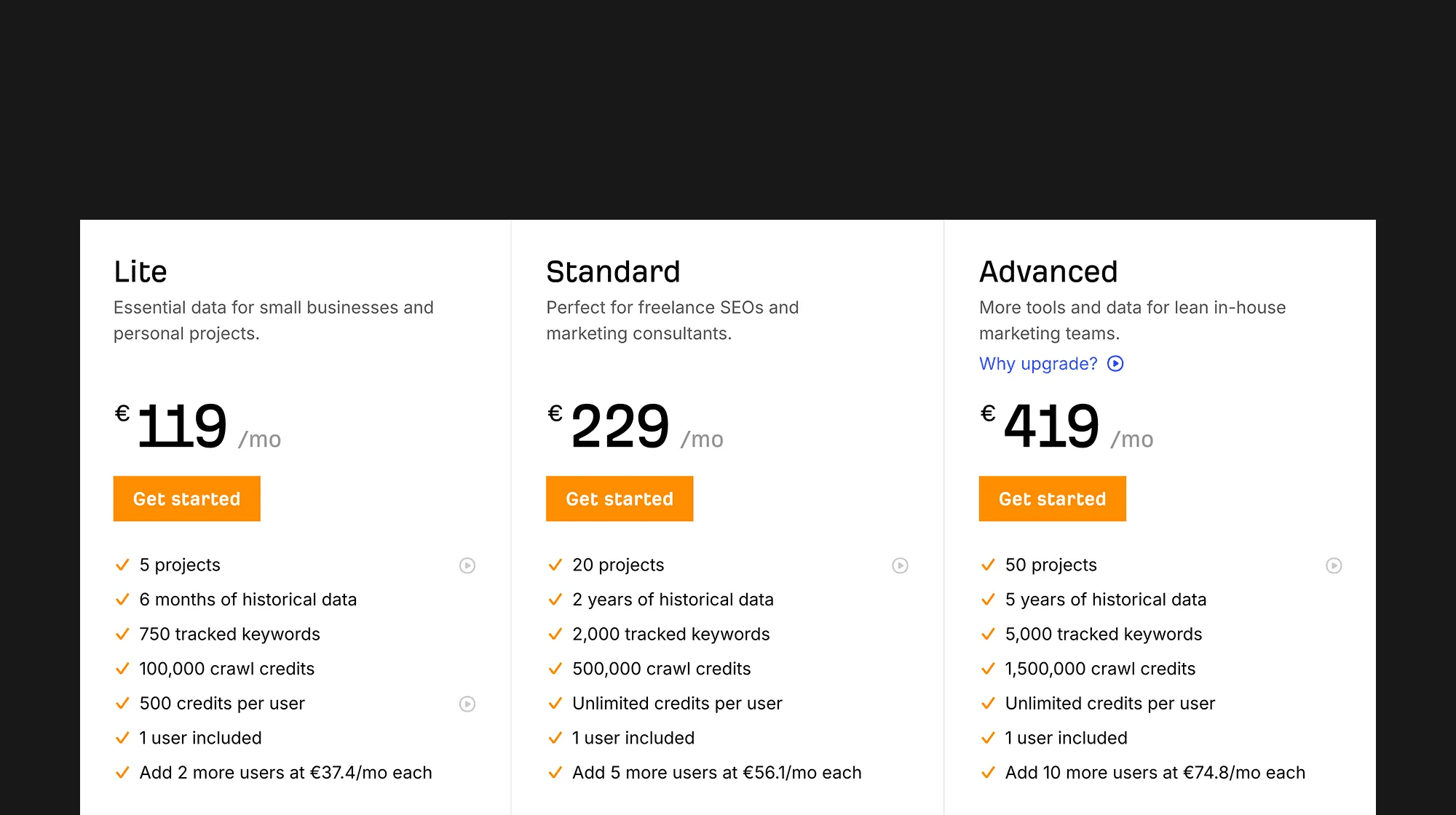
Ahrefs is an example of a SaaS that utilizes fixed-tier subscriptions (Lite, Standard, Advanced). A company pays a flat monthly fee to access their SEO tool and the price is determined by the depth of features access.
Where it breaks
- The "Value Ceiling": If a customer derives exponential value from the tool as they grow, a flat subscription prevents the vendor from capturing a share of that growth.
- Cost Disconnect: If a subscription customer utilizes high-cost resources (like heavy API calls or AI processing) far beyond the average user, the vendor may actually lose money on that specific account.
- Expansion Friction: In a pure subscription, the only way to increase revenue is to wait for the customer to upgrade their plan, whereas usage-based models expand automatically.
Seat-based Pricing (Per-Seat / Per-User)
Seat-based pricing, commonly known as Slot-based, Per-Seat or Per-User pricing, is a model where licenses are granted to users. The customer pays a fixed monthly or annual fee for every person they authorize to access the software. Revenue scales linearly with the customer's headcount.
Why SaaS companies are using Seat-based Pricing Models
- Headcount in this case is seen as a proxy for value: For tools like CRM or project management, more users generally equate to more organizational value, making the pricing feel logical to the buyer.
- Direct Growth Alignment: As a customer's company grows and they hire more employees, the SaaS vendor's revenue automatically expands without the need for a new sales cycle.
The example of Odoo
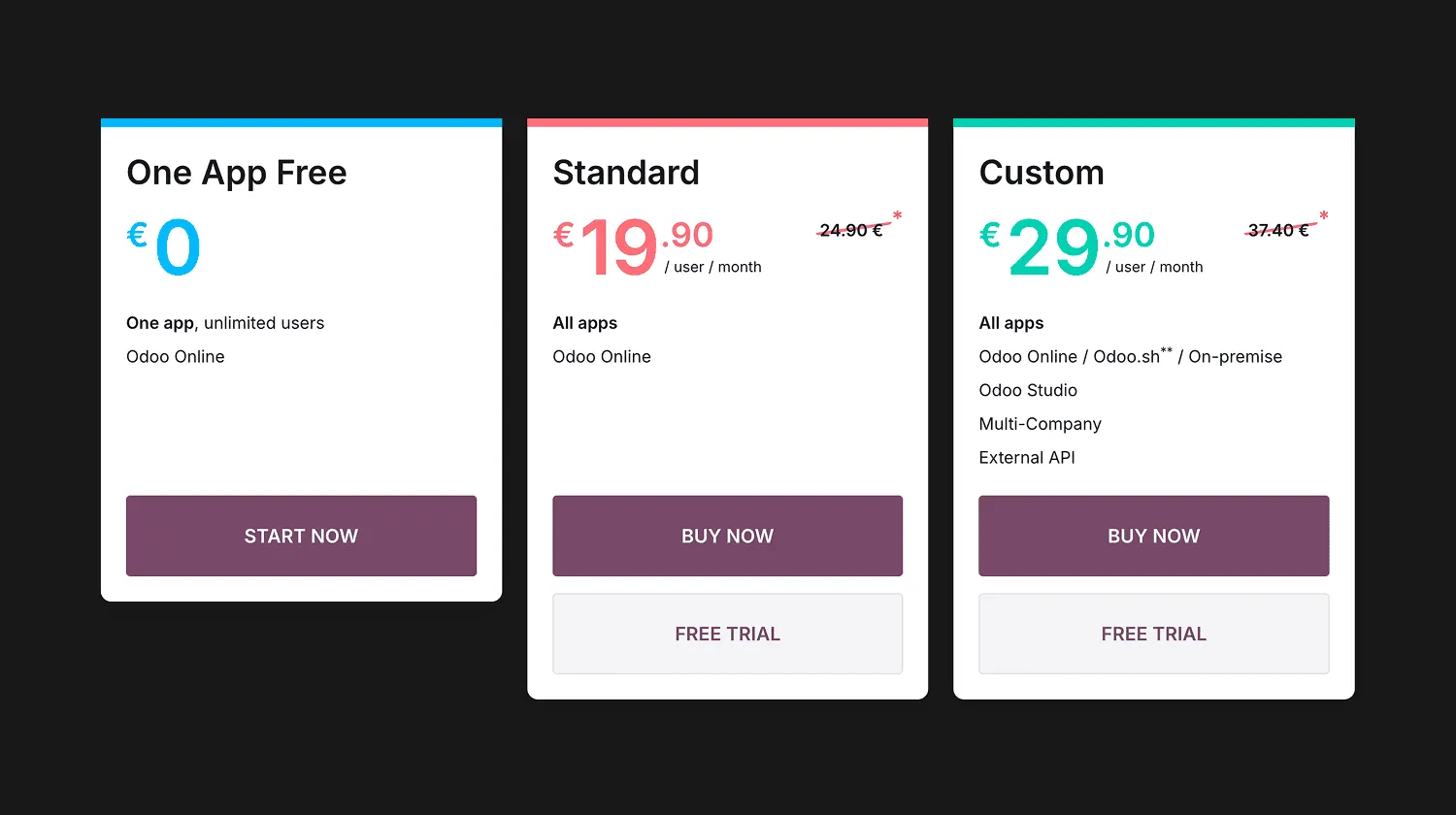
Odoo is an integrated suite of business apps (CRM, accounting, ERP, etc.) and they charge a fixed price per user, per month. This allows the customer to access all of Odoo's applications while only paying based on the number of employees utilizing the system. As the business expands from a small to a mid-sized enterprise, Odoo's ARR scales naturally alongside the customer's hiring.
Where it breaks
- Disincentivized Adoption: Because every new user increases the bill, managers often "gatekeep" access to the software. This prevents the tool from reaching critical mass within a company and makes it easier for the customer to churn.
- The "Ghost"/Occasional User Conflict: Customers often find themselves paying for seats for employees who have left the company, no longer use the tool or only occasionally use it (e.g team managers) leading to frustration during renewal cycles.
- Account Sharing: To save costs, teams may share login credentials for a single seat, which creates security risks and depresses the vendor's potential revenue.
Usage-Based Pricing
Usage-Based Pricing (UBP), also known as metered billing or Pay-as-you-go, charges customers based on their precise consumption patterns. The model is gaining particular traction with the rise of AI, as it allows vendors to align revenue directly with compute costs while ensuring the price reflects the value delivered to the end-user. According to OpenView Partners , 61% of SaaS adopted UBP and an additional 21% experimented with UBP in 2023. Between 2018 and 2022, the number of SaaS companies having adopted this model grew from 27% to 46%.
Per-unit Pricing Model
This is the simplest form of UBP. The customer is charged a fixed, static price for every single unit of a specific metric consumed, with no minimums or tiers.
The example of Twilio
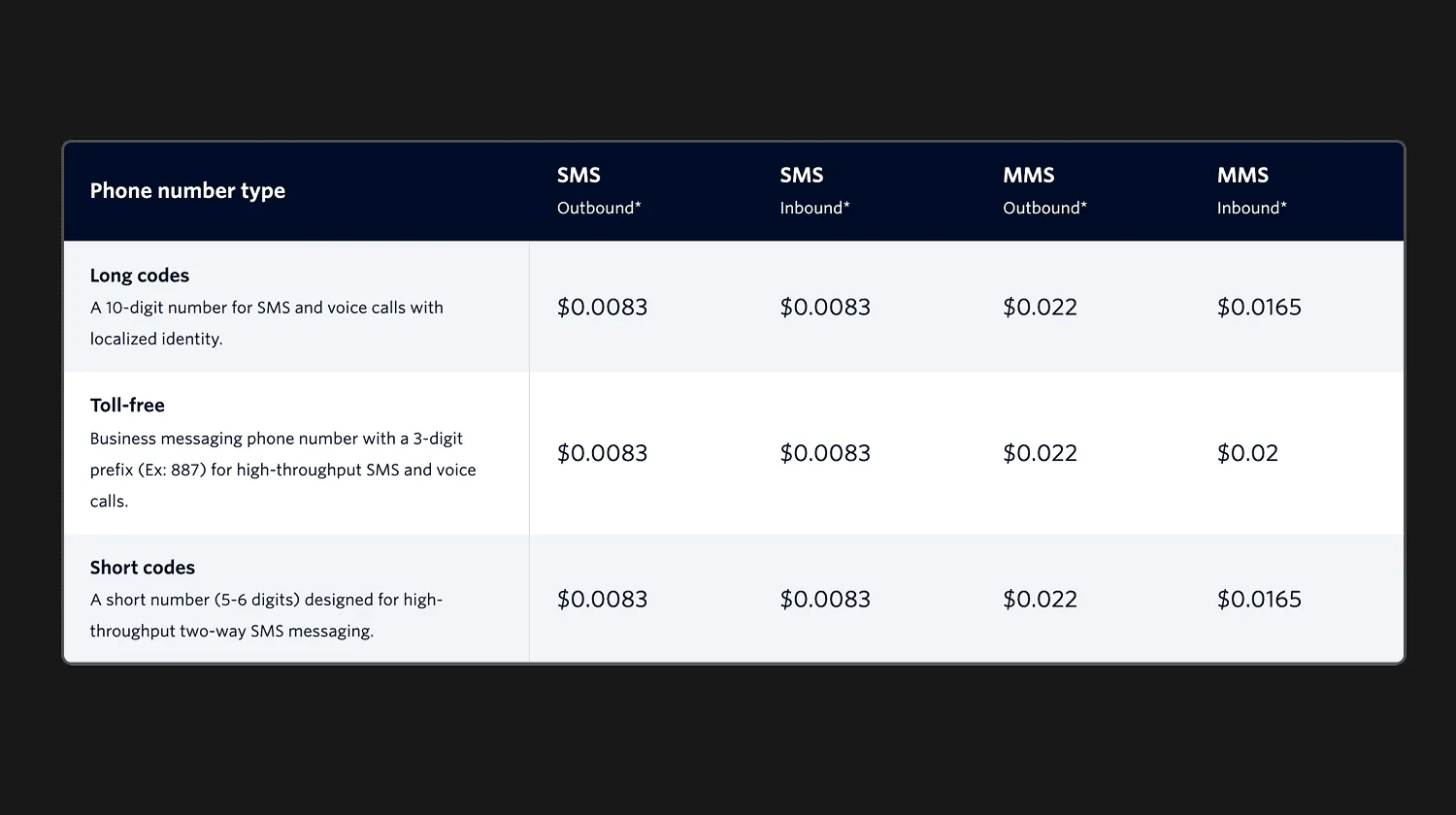
Twilio utilized a per-unit pricing model based on number of SMS being sent. For every SMS sent, the customer is billed a fraction of a cent (e.g., $0.0083 per message). There is no "bulk discount" applied automatically; every unit (ie. SMS sent) costs the same regardless of volume.
Tiered Pricing Model
Usage is divided into "brackets" or tiers. As the customer consumes more, they move into higher tiers, that are usually cheaper. Crucially, the pricing is cumulative: you pay the Tier 1 rate for the first X units, and then the Tier 2 rate only for the units that fall within that second tier.
The example of Amazon Web Services (AWS)
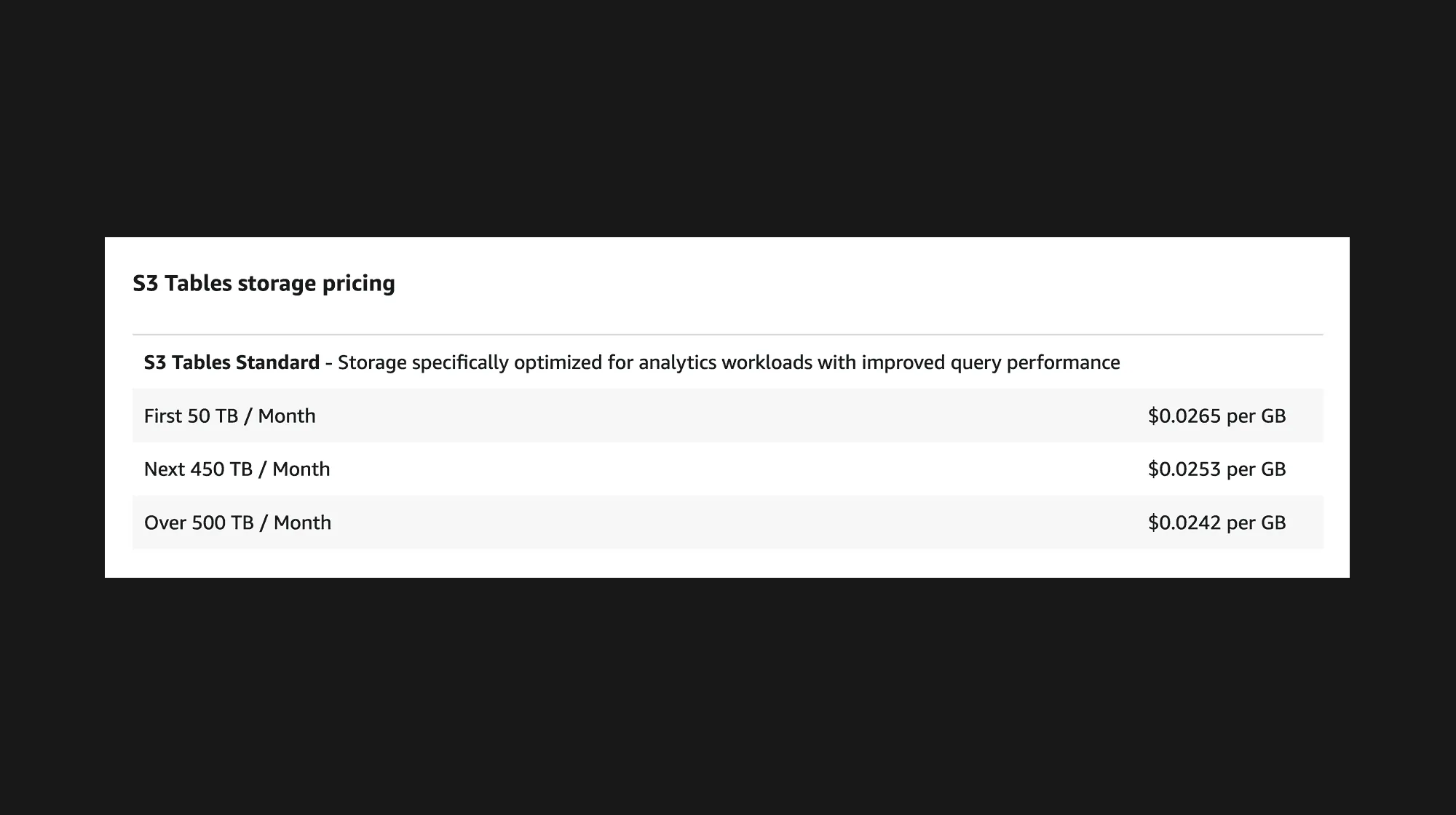
AWS S3 uses tiered pricing for data storage. A customer pays $0.0265 per GB and per month for the first 50 TB and a lower rate ($0.0253 per GB and per month) for the next 450 TB. If a customer stores 200 TB of data in a month, the bill is calculated as follows:
- Tier 1: 50 TB @ $0.0265 = $1,325
- Tier 2: 150 TB @ $0.0253 = $3,795
- Total monthly bill for 200 TB: $5,120
Volume Pricing Model
Similar to tiered pricing, volume pricing has thresholds. However, once a customer reaches a higher volume threshold, the associated price is applied to the entire amount consumed during that period, not just the overage.
Following the AWS S3 example above, a customer would have paid $5.06 in a month to get 200 TB stored (200 TB @ $0.0253 = $5.06).
Package Pricing Model
In this pricing model, users are charged a fixed price per "block" or "pack" of units purchased. This provides a mix of subscription predictability with usage-based scaling. If the user exhausts a "pack" of usage before the end of the period, they must purchase an additional pack to keep on using the solution. The price per block typically remains the same, but the total cost increases as more blocks are added to the account.
The example of Algolia
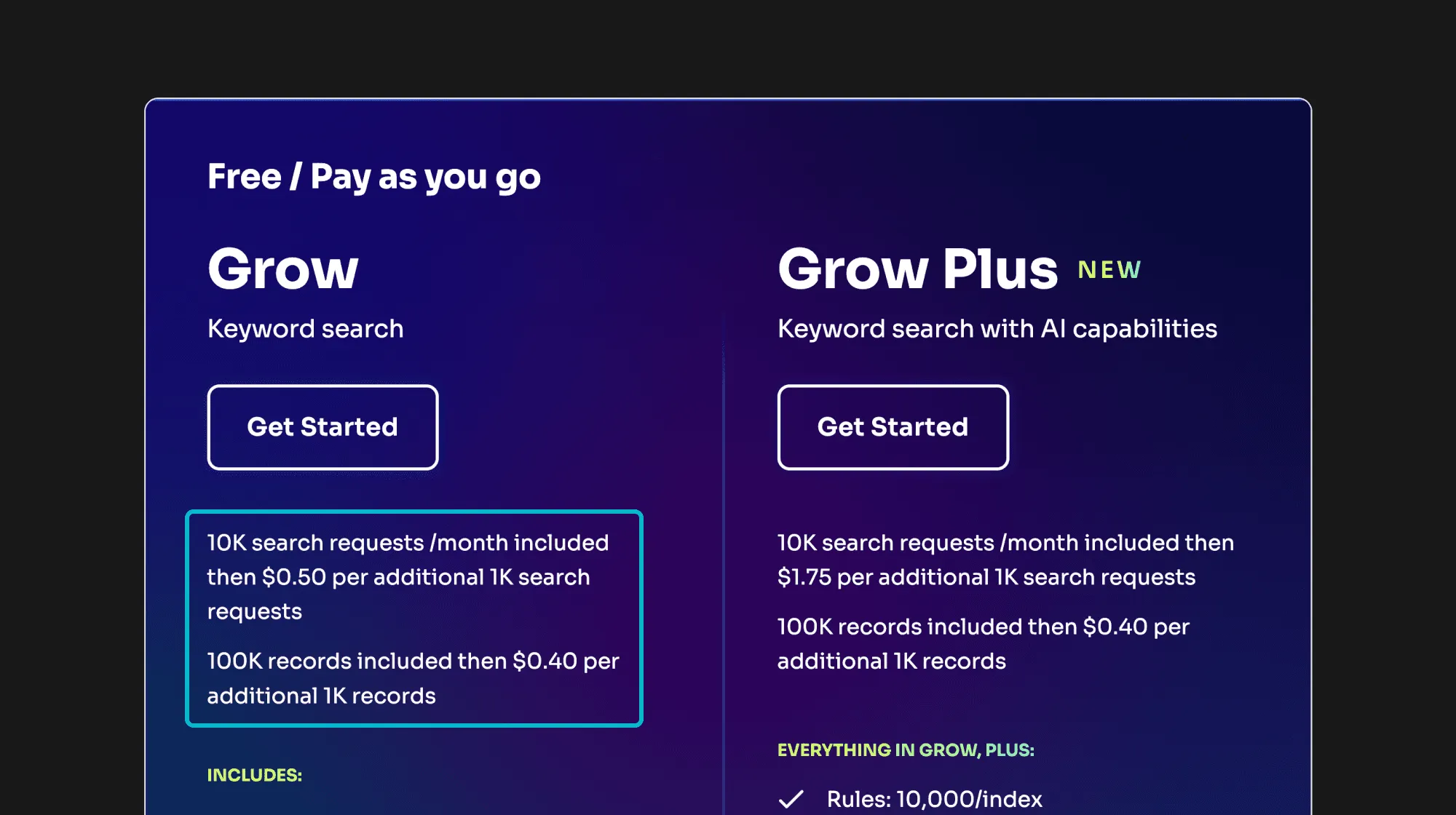
Algolia employs a package-based strategy to provide a search-as-a-service solution. Their Growth Plan starts with a base package that includes 10,000 search requests per month and allows for up to 100,000 records (items indexed). If a customer exceeds these limits, Algolia charges overages at a rate of $0.50 per 1,000 additional search requests and $0.40 per 1,000 additional records.
Multi-dimension Pricing Models
Multi-dimension pricing (also called matrix pricing) is a model where the price is defined according to multiple variables. Instead of charging for just one thing (like the number of users), the final price is calculated where two or more different usage metrics intersect.
The example of OpenAI APIs
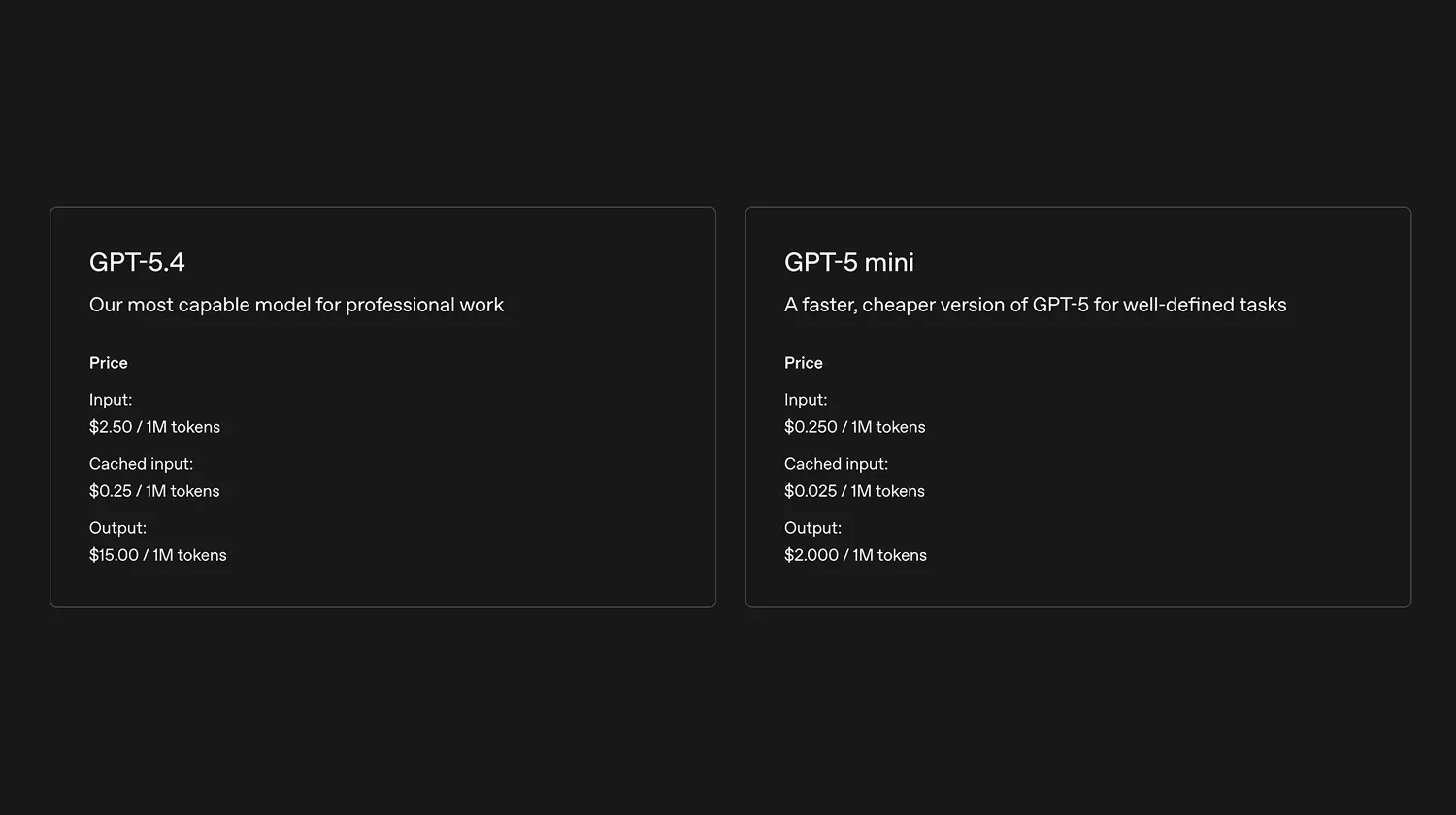
OpenAI uses a 2 dimensions pricing model to monetize their APIs:
- Dimension 1: The AI Model. Pricing varies based on the model used (e.g., GPT-5.4 vs. GPT-5 Mini).
- Dimension 2: Token typology. Within each model, input, cached and output tokens are priced differently.
Why SaaS companies are using Usage-Based Pricing Models
- Align pricing with customer value: UBP scales with the actual value a customer derives from your product. This leads to higher customer satisfaction and trust.
- Increase revenue opportunities: UBP allows your revenue to grow as customers use more of your service, meaning there's potential for scalable growth with no need for constant price negotiations.
- Lower barrier to entry: UBB allows new users to start small (often with a free plan) and scale their costs as they see more value. This lowers the financial barrier to entry and makes your product more accessible.
- Enhance customer retention: Customers are more likely to stay when they feel they're only paying for what they need and use, making UBP an attractive option for long-term customer loyalty.
Where Usage-Based Pricing Models break
- Predictability: For customers, usage-based pricing can introduce unpredictability. For SaaS company, this unpredictability could mean uneven revenue from month to month, especially if customers have unpredictable usage patterns.
- Complex Billing and Invoicing: usage-based billing requires accurate tracking and reporting of each customer's usage in real-time, which can complicate your billing process.
- Customer Education and Communication: customers might require more education to understand exactly what they're being charged for and why. Effective communication is key to ensuring that customers feel confident in the model.
Hybrid Pricing Models
A hybrid billing model blends two or more pricing strategies to create a flexible and adaptable structure. Commonly, this includes a combination of:
- Subscription-Based Pricing: Charging customers a fixed fee at regular intervals (e.g., monthly or annually) for core features or baseline services. This ensures predictable revenue streams.
- Usage-Based Pricing (UBP): Adding charges based on how much of the product or service is used, or for accessing features beyond the subscription's baseline. Metrics might include transactions, data volume, or the number of users.
Why SaaS companies are using Hybrid Pricing Models
Flat subscriptions or pure usage-based models often struggle to strike the right balance between fairness, flexibility, and predictability:
- Fixed Subscriptions: While simple and predictable, these can deter cost-sensitive customers who worry about paying for unused features or services.
- Pure Usage-Based Models: While flexible, they can lead to unpredictable bills, causing anxiety for customers and instability for providers.
Hybrid billing addresses these issues by marrying the stability of subscriptions with the flexibility of usage-based pricing. It's a win-win for businesses and customers alike.
The example of Meteroid
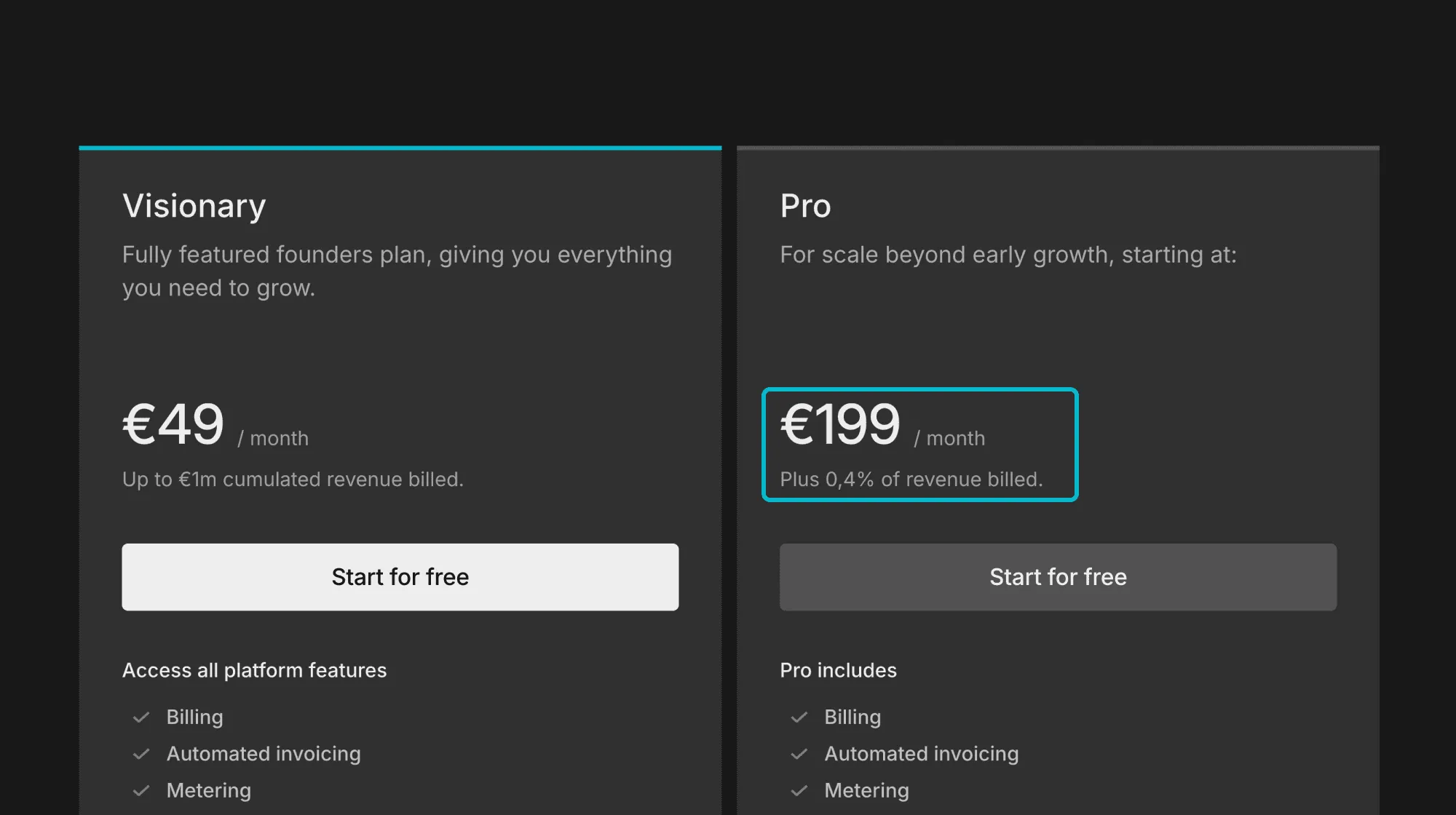
Meteroid's Pro Plan is a typical example of hybrid pricing model where customers are charged:
- a fixed €199/month fee
- a % of revenue managed fee (revenue being used as a proxy of usage)
Capacity commitment Pricing Models
Capacity commitment is a pricing model where a customer agrees to purchase a specific volume of a resource (e.g., data, emails, API calls...) upfront for a defined period, usually monthly or annually, with additional usage beyond this limit billed as an overage. While Package Pricing charges users for every block consumed, Capacity Commitment provides a pre-paid "allowance" and only charges extra once that threshold is crossed.
Why SaaS companies are using Commitment Pricing Models
- Financial Predictability: Capacity commitments "lock in" a minimum revenue floor, allowing the vendor to report stable, predictable growth metrics. This predictability is equally valuable for the buyer. By establishing a fixed baseline cost, procurement and finance departments can budget with certainty, making the software much easier to get approved internally compared to the "unknown" monthly variables of pure pay-as-you-go models.
- Cash-flow optimization: By collecting payments at the start of the contract, SaaS companies gain immediate working capital.
The example of Postmark
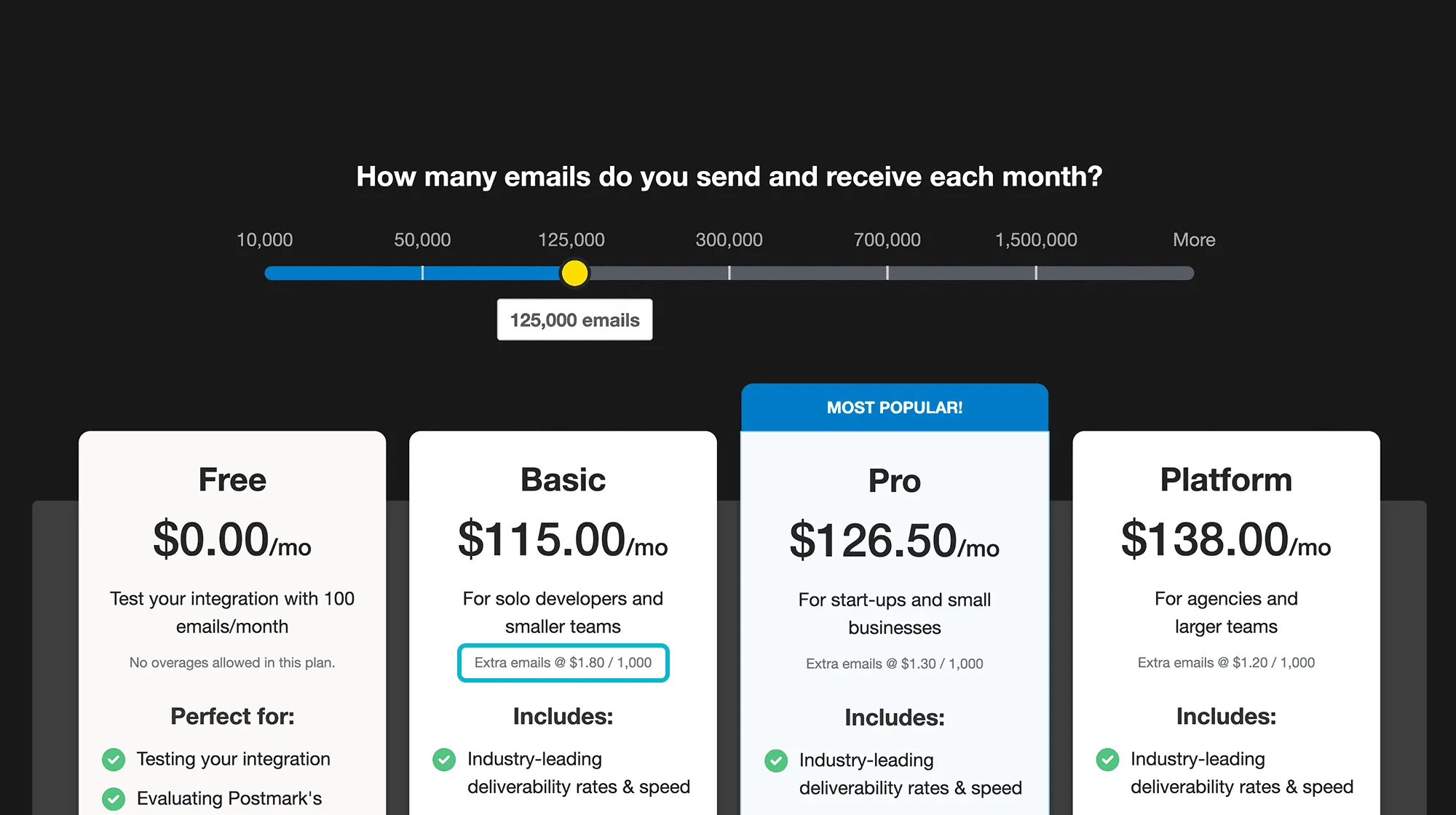
Postmark requires users to choose a monthly email capacity (sent or received). For example, if a user commits to 125,000 emails, they pay a fixed base fee of $115.00/month for the Basic Plan or $126.50/month for the Pro Plan. Changing this capacity slider immediately adjusts the price of the different plans. If customers exceed this threshold, they are billed for overages at a set rate based on their plan (e.g $1.80 per 1,000 extra emails for the basic Plan or $1.30 per 1,000 extra emails for the Pro Plan).
Where Capacity Commitment pricing model breaks
- Use-it-or-lose it: customers who consistently use less than their commitment can feel over-billed, which can trigger downgrading or churn during renewal cycles.
- Overage friction: While commitments provide predictability for the base cost, significant spikes in usage lead to unexpected overage charges. This is especially painful for customers who chose commitment specifically to avoid volatility.
Zooming in on AI monetization: The rise of Credit-based and Outcome-based pricing models
What is a Credit-Based Pricing Model?
In a credit-based model, customers buy a pool of "Credits" or "Tokens". Different actions within the software are assigned different "prices" in terms of credits. For example, generating a high-resolution image may consume more credits than processing a short snippet of text. This model has seen a massive surge in popularity recently, driven primarily by the rise of AI as a way to bridge the gap between abstract compute costs and tangible user value.
Why AI SaaS companies are using Credit-Based Pricing Models
- **Aligning revenue and costs:** Credit-based pricing is gaining increasing popularity due to the rise of AI. Credits allow vendors to align revenue with the costs of different AI models (e.g., GPT-4o vs. GPT-4o-mini) —charging more credits for high-reasoning tasks and fewer for simple ones.
- **Optimized cash-flows:** Credit-based pricing significantly optimizes the vendor's cash flow. Because users typically buy credits in advance, the vendor receives the payment upfront, well before the actual resources (compute, storage etc) are consumed.
- **Psychological Buffering:** Spending "credits" often feels less painful to a user than spending "dollars" in real-time. This reduces the friction of trying new features. Furthermore, it allows for a "Top-up" mechanism where users can quickly buy more credits without renegotiating a core contract.
The example of Leonardo.ai
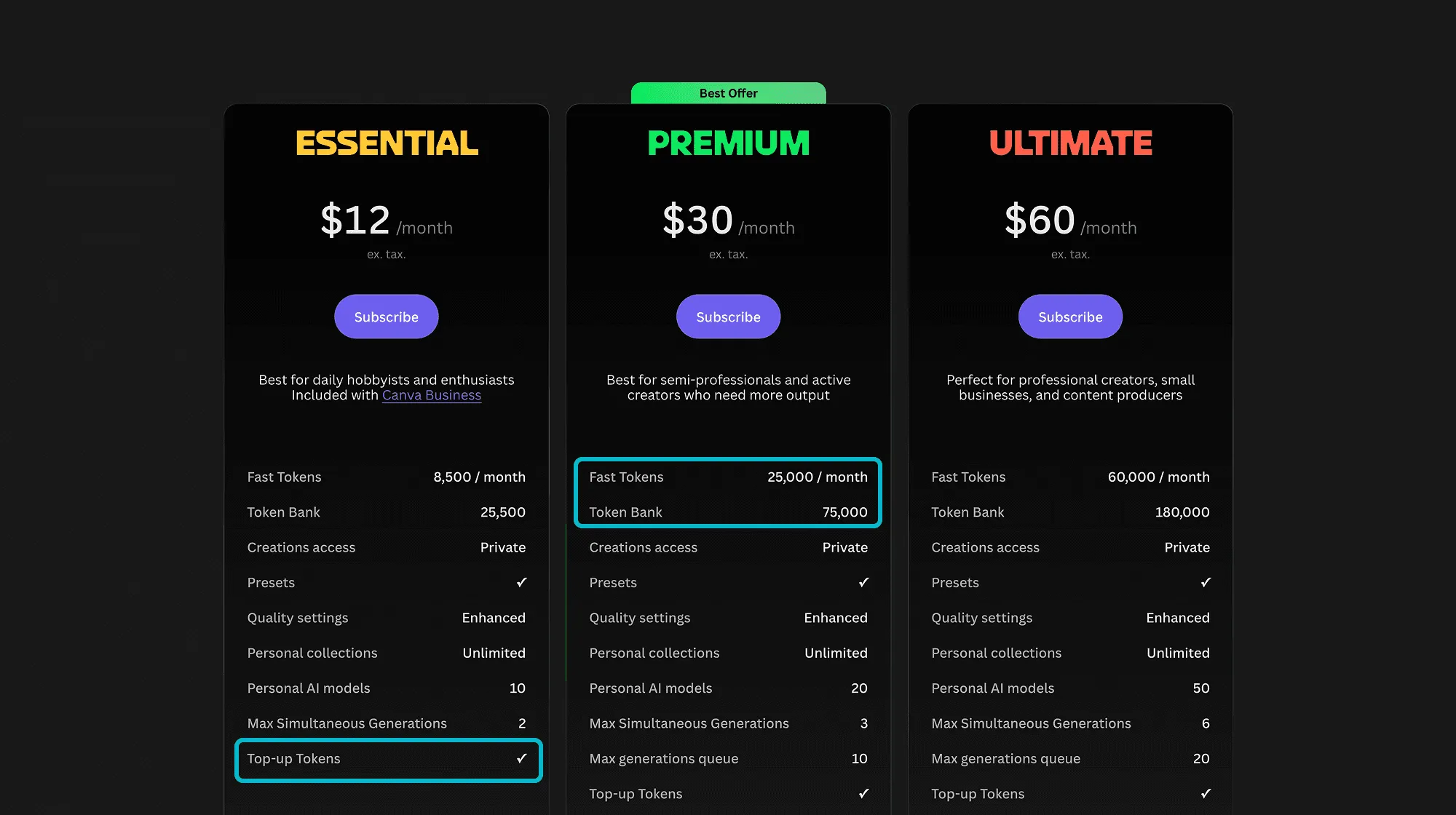
Leonardo.ai's pricing provides an example of credit-based pricing model in the AI space. They use Fast Tokens to monetize the most advanced AI models and premium features. Leonardo allows users to accumulate credits up to a specific "Rollover Bank" limit. This allows users to accumulate unused tokens from previous cycles, provided they do not exceed the maximum capacity of their bank. Finally, if a user runs out of tokens before their next billing cycle, they can buy Top-up tokens. These are one-time purchases that allow the user to immediately increase their balance and continue their workflow.
Where Credit-based Pricing Models breaks
- **Transparency:** The primary friction point in this model is the cognitive overhead of the "Double Conversion." While the conversion rate between dollars and tokens/credits is often straightforward (e.g., $10 for 1,000 credits), the link between those credits and actual usage is often opaque for both users and AI companies alike. Indeed, if a user has to do complex math to figure out if an action is worth it, or if they cannot easily predict how many credits a specific task will consume, they may hesitate to use the product at all. And if AI companies cannot precisely map tokens to their ever-changing underlying GPU costs, they end up operating in the dark.
- **Revenue Recognition:** From an accounting perspective, unspent credits can be a headache. Depending on the jurisdiction, "unused credits" might sit on the balance sheet as a liability rather than recognized revenue until they are actually consumed or expire.
What is an Outcome-Based Pricing Model?
In an outcome-based model customers pay for the successful completion of a business goal. Unlike usage-based models (where you pay for the effort like tokens or API calls), this model charges for successfully accomplished tasks (e.g., a resolved ticket or a booked meeting). This pricing model is becoming increasingly popular for AI Agent platforms because it allows them to be priced as a "digital employee" rather than a software tool.
Why AI SaaS companies are using Outcome-Based Pricing Models
- **Lower barrier to entry:** "You only pay if this works" is the ultimate sales pitch. It drastically lowers the barrier to entry and shortens sales cycles, as procurement departments find it difficult to argue against a model that guarantees a positive Return on Investment (ROI).
- **Value alignment:** With the rise of AI, technical metrics like tokens can be disconnected from value. Buyers don't care how many tokens an AI used to think; they care that the problem was solved. Outcome-based pricing allows AI vendors to charge for the value of the solution rather than the cost of the computation.
The example of Intercom
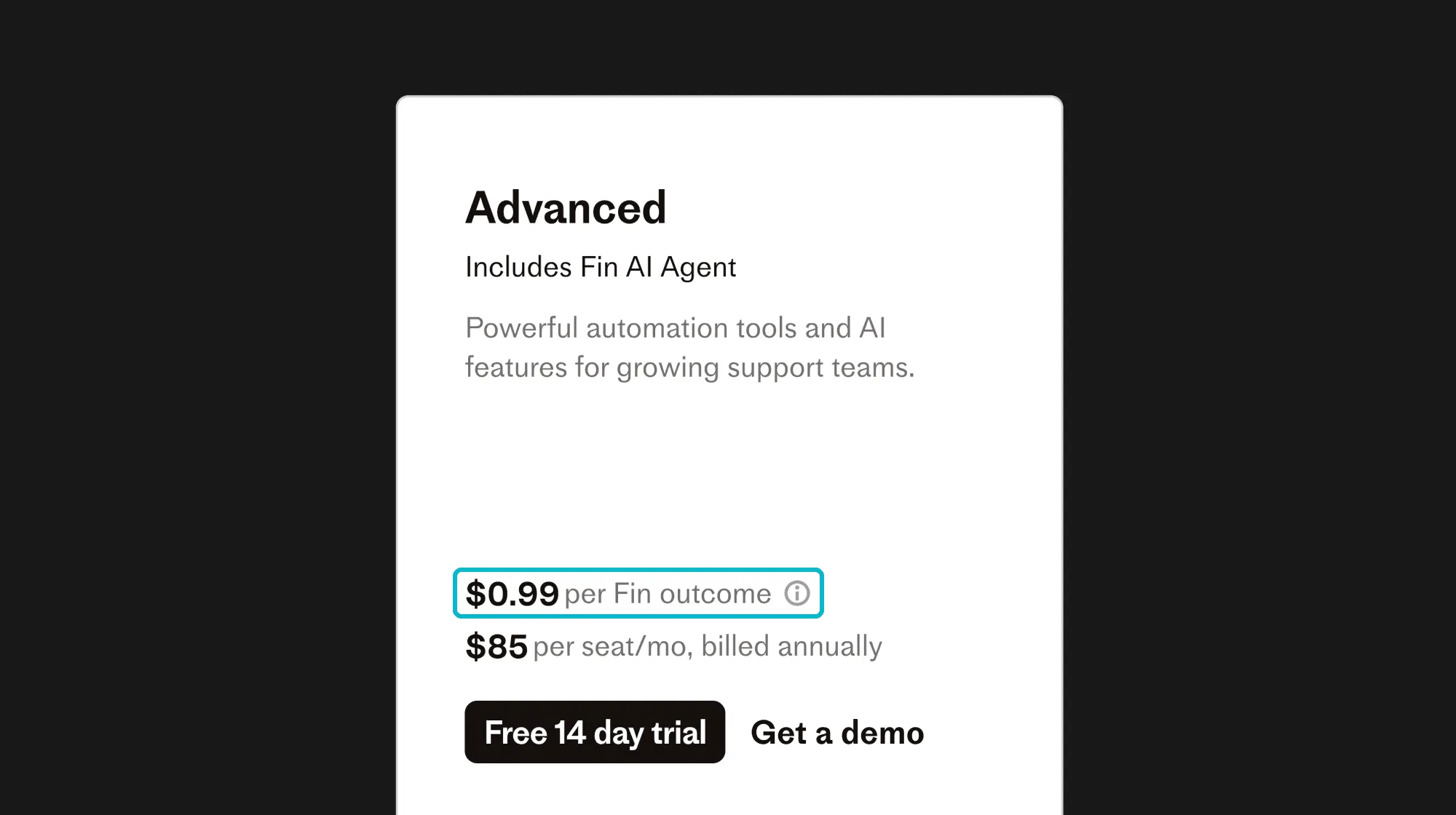
Intercom has pioneered this model in the customer service space with their Fin AI Agent. They charge $0.99 per successful resolution.
Where Outcome-Based Pricing Models breaks
- **Outcome definition:** When is a task considered as "done"? If a vendor provides immense value that isn't captured in the defined outcome, they may be under-compensated. For example, if an AI agent provides helpful information but the user doesn't "resolve" the ticket according to the technical definition, the vendor works for free.
- **Revenue Volatility and Unpredictability:** For the vendor, revenue becomes extremely hard to forecast. If a customer's business has a bad quarter, the vendor's revenue can drop even if the software performed perfectly.
Operationalizing Your SaaS pricing strategy: How to win
Choose the Right Value Metric and Build Customer Trust
Operationalizing a pricing strategy is more than just setting a price; it is about building trust with your Customers. The cornerstone of this approach is the Value Metric.
What is a Value Metric?
The value metric is the variable your pricing model is based on. It is the specific unit you charge your customers for, common metrics including seats (Slack), data processed (Snowflake), or successful resolutions (Intercom).
If you choose the wrong metric, you create a Value Mismatch. This carries a dual risk for the vendor:
- **Churn:** If Customers feel that what they're paying is not aligned with the value they get it creates immediate frustration and a high risk of churn as the customer seeks a more "fair" alternative.
- **Under-Monetization:** Conversely, if the metric doesn't scale with the value the customer receives, the vendor leaves significant revenue on the table, essentially subsidizing the customer's growth at their own expense.
How to Define a good Value Metric
To build a scalable and trusted pricing model, your value metric must meet four critical criteria:
- **Easy to Understand:** A customer should be able to explain it to their CFO in one sentence. If the metric is too abstract (e.g., "weighted compute units"), the buyer will hesitate because they cannot predict their own costs.
- **Easy to Measure:** You must be able to track it accurately and objectively. If there is ambiguity in how a unit is counted, it leads to billing disputes that erode trust.
- **Correlated to Value:** This is the most important rule. As the customer gets more value from your product, the metric should naturally increase. If a customer is growing but their bill stays flat (or vice versa), the pricing model is broken.
- **Recurring:** To maintain a healthy SaaS business, the metric should represent ongoing usage rather than a one-time event. It should reflect the continuous "pulse" of the customer's business.
Transparency and Control build Trust
Pricing that is invisible is pricing that backfires. Lack of transparency leads to Bill Shock, which triggers support tickets, refund demands, and ultimately, churn. To maintain trust, two tactical pillars are crucial:
- **Clear and Transparent Invoicing:** The invoice is a communication and marketing tool, not just a payment request. Every invoice must provide full visibility into usage. Providing this level of detail ensures the customer understands exactly what they are being billed for and prevents disputes that damage long-term relationships.
- **Real-Time Consumption Alerts:** Customers should never be surprised by their bill at the end of the month. Operationalizing trust means implementing automated alerts that notify users when they reach specific thresholds (e.g., "You have consumed 80% of your monthly allowance"). Putting customers in control through proactive alerts demonstrates that you aren't trying to "trick" them into overages, but rather helping them manage their budget effectively. This transparency significantly reduces friction and keeps the focus on the value delivered rather than the cost incurred.
Empowering People: The Case for a Chief Monetization Officer
In many SaaS companies, pricing is "homeless"—it sits at the intersection of Product, Go-to-Market (GTM) teams, Finance, and Engineering, yet no single leader owns the end-to-end outcome. As companies transition from simple flat-fees to complex usage-based and hybrid models, this lack of ownership becomes a strategic liability.
The "Homeless" Pricing Trap: Why Strategy Fragments
In a traditional organization, monetization is a distributed process where each actor is responsible for a specific part. However, because each department prioritizes its own KPIs, the overall strategic view is often lost. Pricing becomes "homeless" because it sits in the gaps between:
- **Product (Responsible for Packaging):** They decide which features belong in which plan. Their goal is engagement and high feature adoption, which often leads them to "bundle" features in ways that don't align with how customers actually spend, or giving away too much value for free.
- **Engineering (Responsible for Metering & Logging):** They own the infrastructure that tracks usage (e.g., API calls, storage). Their priority is system stability and performance; without a monetization lead, they may log data in a way that is technically efficient but commercially unbillable.
- **GTM - Marketing & Sales (Responsible for Communication & Discounting):** Marketing owns the narrative, while Sales owns the closing. Because their primary metric is often "New Logos" or "Bookings," they frequently use heavy discounting to bypass pricing friction, which can inadvertently devalue the product.
- **Finance (Responsible for Invoicing & RevRec):** They own the "Bill." Their focus is on accuracy, compliance, and collections. They often lack the technical visibility to understand why a customer's usage spiked, leading to reactive conversations about "Bill Shock."
The Result: The monetization strategy is homeless as no one owns the overall view of monetization and the alignment of price, value, and cost is neglected.
Why Appointing a Chief Monetization Officer (CMO) is the Logical Answer
To solve the homelessness of pricing, organizations must move toward a Monetization Operating Model led by a dedicated executive: the Chief Monetization Officer (CMO) or Chief Value Officer (CVO).
The CMO is the logical answer to pricing complexity because they serve as the single point of accountability for the entire value-capture lifecycle. Their role is to transform pricing from a static list into a dynamic strategic engine:
- **Breaking the Silos:** The CMO acts as the "Architect of Value," ensuring that Engineering builds the metering that Sales is actually incentivized to sell. They bridge the gap between the R&D cost (COGS) and the market price.
- **Owning the Monetization Stack:** They treat the billing and metering infrastructure as a core product, not a back-office utility. This allows the company to experiment with new models in weeks rather than quarters.
- **Continuous Value Alignment:** Unlike a committee that meets once a year, a CMO continuously monitors consumption patterns. They identify "under-monetized" power users and adjust tiers or overage rates proactively to ensure the price-to-value ratio remains healthy.
- **Protecting the Narrative:** The CMO ensures that Marketing and Sales communicate price in a way that builds trust. By owning the discounting policy, they prevent the "race to the bottom" that often occurs when GTM teams are left to manage pricing on their own.
Operationalizing ownership means recognizing that Monetization is a Product. It requires its own roadmap, its own dedicated resources, and its own seat at the executive table. By appointing a CMO, you ensure that as your product creates more value, your business is structurally designed to capture it.
The Monetization Loop: Processes & Billing software
Operationalizing pricing is not a one-time event, but a never-ending loop. According to OpenView Partners, 94% of B2B SaaS companies updated their pricing or plans at least once in 2023, with 38% of them iterating as frequently as every quarter. To maintain this level of agility and capture value effectively, companies need a combination of robust processes and modern tooling. Without them, the Chief Monetization Officer may be capable of designing a strategy, but unable to execute it at the speed the market demands.
A Robust Iteration Process
If you want to operationalize pricing models that scale, you must move away from "gut-feel" changes toward a repeatable, data-driven cycle:
- **Gather Insights:** Start by benchmarking against competitors to understand market positioning. More importantly, analyze product usage data to identify exactly where your customers find value. Which features drive retention? Which metrics correlate with customer success?
- **Experiment & Test:** Don't just guess. Run experiments on packaging, price points, and segmentation.
- **Align Internal Stakeholders:** Monetization impacts almost every function (cf. above). You must socialize the "Why" behind pricing changes with at least Finance (for impact on financials), Product (for roadmap alignment), GTM (for commission impact & communication), and the CEO (for strategic goals).
- **Launch & Monitor:** Once aligned, launch the new pricing. The loop then restarts as you monitor the impact on conversion, expansion, and churn.
Tooling: Moving Beyond the Tech Project
A common mistake is treating pricing iterations as a "tech project" that requires Engineering to hard-code new logic every time a plan changes. To scale usage-based and hybrid pricing, the monetization stack must be a tool for business users, not just a set of API endpoints.
Most legacy billing platforms were built for simple, seat-based subscriptions. They aren't built to handle the high-volume event ingestion, real-time metering, and complex aggregation logic required for usage-based models. Meteroid is.
As a purpose-built monetization platform, Meteroid helps SaaS implement complex pricing models without writing a single line of new code. By turning "billing" into a configurable business utility, Meteroid enables the agility required to stay competitive in the "Value Era."